Protein Doesn’t Have to Be Complicated
Protein matters for strength and recovery, but it doesn’t need to become complicated. A practical look at how to include enough protein in everyday meals without obsessing over numbers.
Protein gets talked about a lot in fitness. Sometimes so much that it starts to sound more complicated than it really is.
How many grams? Before training or after? Animal or plant? Protein shake or whole food? What if you miss your target?
For something so basic, it can become surprisingly stressful.
But for most people, getting enough protein does not need to take over the way they eat. It starts with understanding why it matters.
Protein is part of the rebuilding process
Strength training gives your muscles a reason to adapt. Protein gives your body some of the material it needs to do that work.
That is why protein and strength training are often discussed together.
But protein is not only for people trying to build large amounts of muscle. It is part of everyday nutrition, and your body uses it for muscle tissue, enzymes, hormones, immune function and many other processes.
When you train regularly, getting enough protein becomes especially useful because your body is repeatedly repairing and adapting.
How much protein someone needs depends on things like body size, activity level and goals, so there is not one perfect number for everyone.
That does not mean every meal needs to become a calculation.
You probably do not need to eat like a bodybuilder
This is where people often make nutrition harder than it needs to be.
They start strength training and suddenly feel like they need to redesign their entire diet: chicken at every meal, protein shakes twice a day, food containers prepared for the whole week, everything weighed, everything tracked.
That approach works for some people. But it is not the only way to eat enough protein.
A much simpler approach is to start looking at the meals you already eat and ask one question:
Where is the protein?
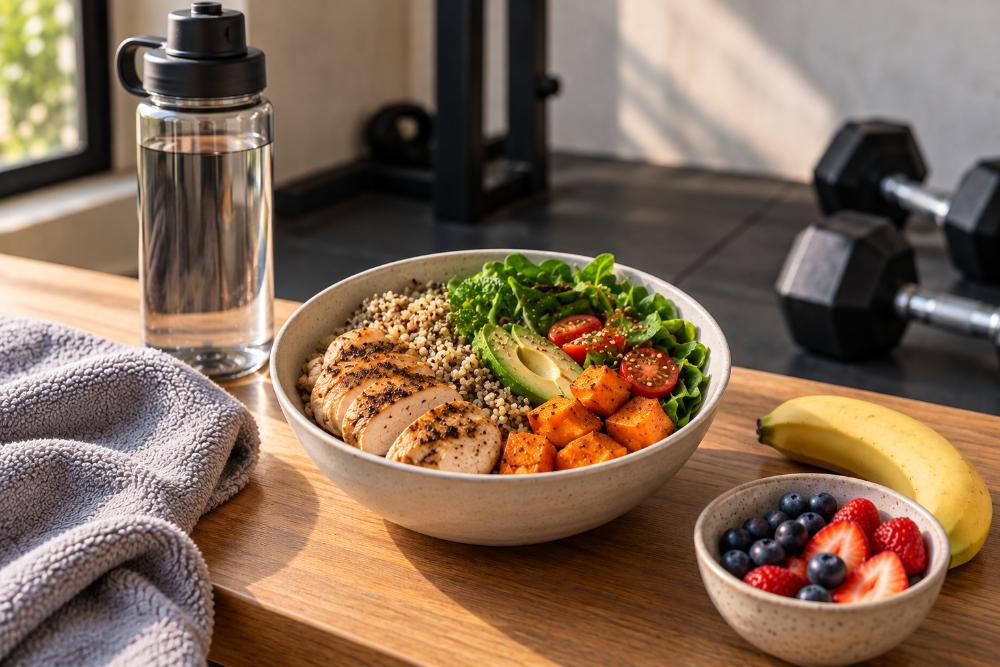
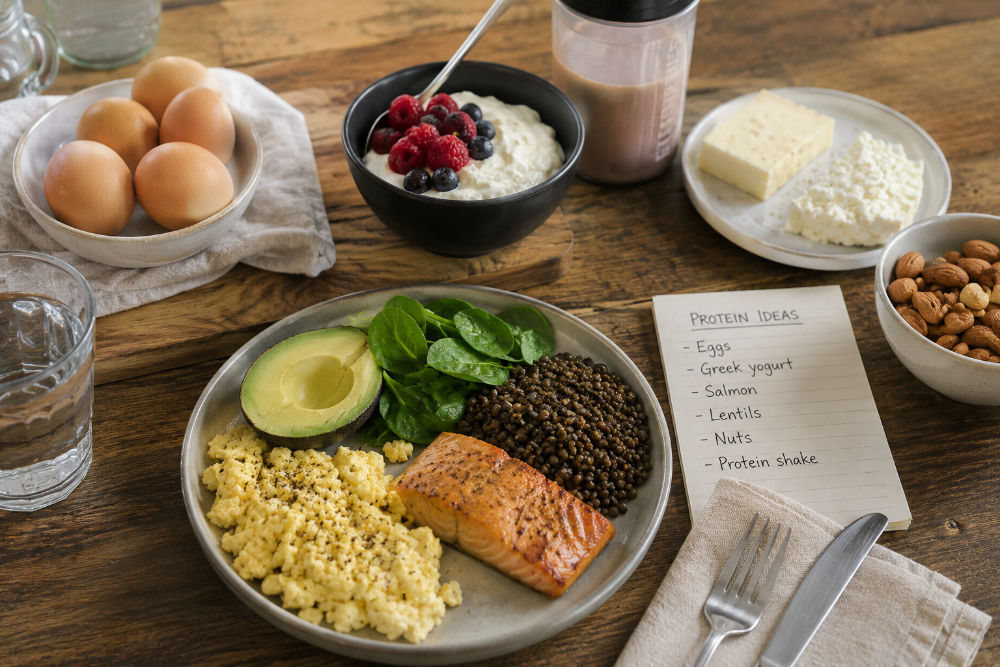
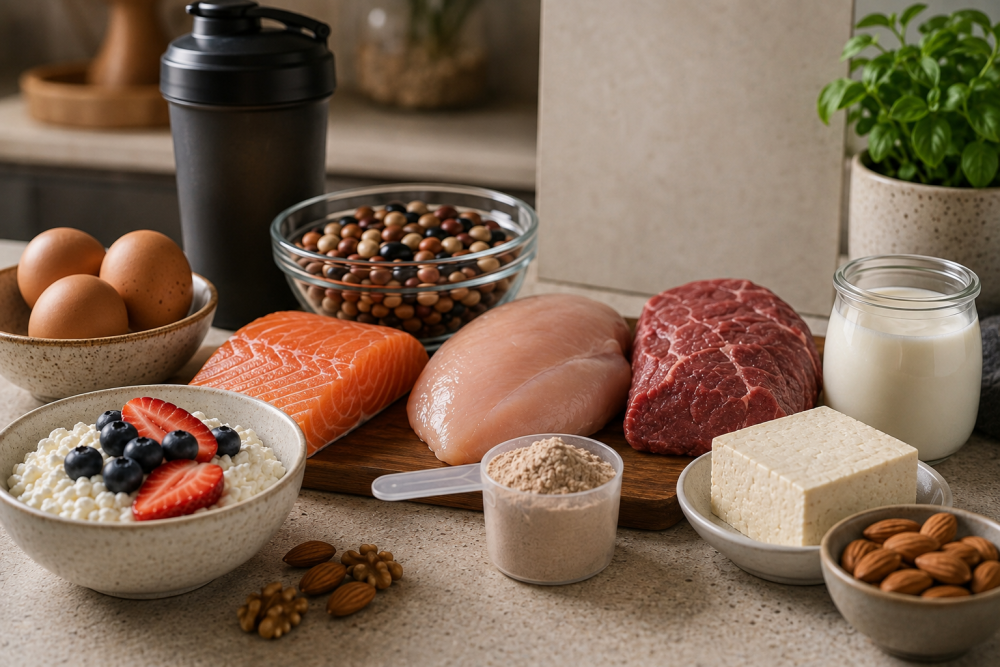
Breakfast might include eggs, Greek yogurt, cottage cheese or milk. Lunch might include chicken, fish, beans, lentils, tofu or another protein source. Dinner could include something similar.
Snacks might include yogurt, cheese, nuts or a protein shake if it is convenient.
You do not necessarily need completely new meals. Sometimes you just need to make the meals you already enjoy a little more balanced.
Protein shakes are useful, not magical
Protein powder has a strange reputation.
Some people think it is essential. Others think it is something only serious bodybuilders use.
Neither is really true.
A protein shake is simply a convenient way to add protein.
It can be useful when you are busy, when a meal is low in protein, or when you simply find it easier than preparing another source of food.
But it does not have special powers.
If you get enough protein from regular food, you do not need a shake. And if a shake helps you reach your needs more easily, there is nothing wrong with using one.
Convenience matters too.
Not every meal has to be perfect
Nutrition advice often creates the impression that every meal needs to be ideal.
Perfect protein. Perfect vegetables. Perfect portions. Perfect timing.
Real life does not work like that.
Some meals will be balanced. Some will not. Some days you will eat very well. Other days will be different.
What matters much more is what your eating looks like most of the time.
One lower-protein meal will not ruin your progress. One perfect meal will not create it either.
Just like training, nutrition works through patterns.
Spreading protein across the day can make things easier
One simple habit is to include some protein in several meals rather than trying to eat a huge amount all at once.
That might mean adding eggs or yogurt at breakfast, including a good protein source at lunch, and having protein again at dinner.
Maybe you add a protein-rich snack if you need one.
This usually feels much easier than reaching the end of the day and realising you have eaten very little protein.
It also removes some of the pressure.
You are not chasing one huge number. You are simply building protein into the way you normally eat.
More protein is not always better
Once people learn that protein matters, it is easy to assume that more must be better.
Not necessarily.
Protein is important. But so are carbohydrates. So are fats. So are fruits, vegetables, fibre, vitamins, minerals and enough total food.
Training requires energy too.
You can hit an impressive protein target and still have a poor overall diet.
The goal is not to make protein the centre of every food decision.
The goal is to make sure it has a reasonable place in a balanced diet.
Food still has to fit your life
The best nutrition plan is not the one that looks most disciplined online.
It is the one you can live with.
Maybe you enjoy cooking. Maybe you do not. Maybe you eat three large meals. Maybe you prefer smaller meals. Maybe you use protein powder. Maybe you never do.
There are many ways to eat well.
The more your nutrition fits naturally into your routine, the more likely you are to keep doing it.
And consistency matters here just as much as it does in training.
Keep it simple
Protein matters, but it does not need to become another thing to obsess over.
Start with your normal meals. Look for where protein is already present. Add some where it is missing. Choose foods you actually enjoy. Use convenient options when you need them.
And remember that one meal, one day or one missed target does not define your nutrition.
The goal is not to eat perfectly.
It is to eat well enough, often enough, to support the life and training you want to keep doing.